
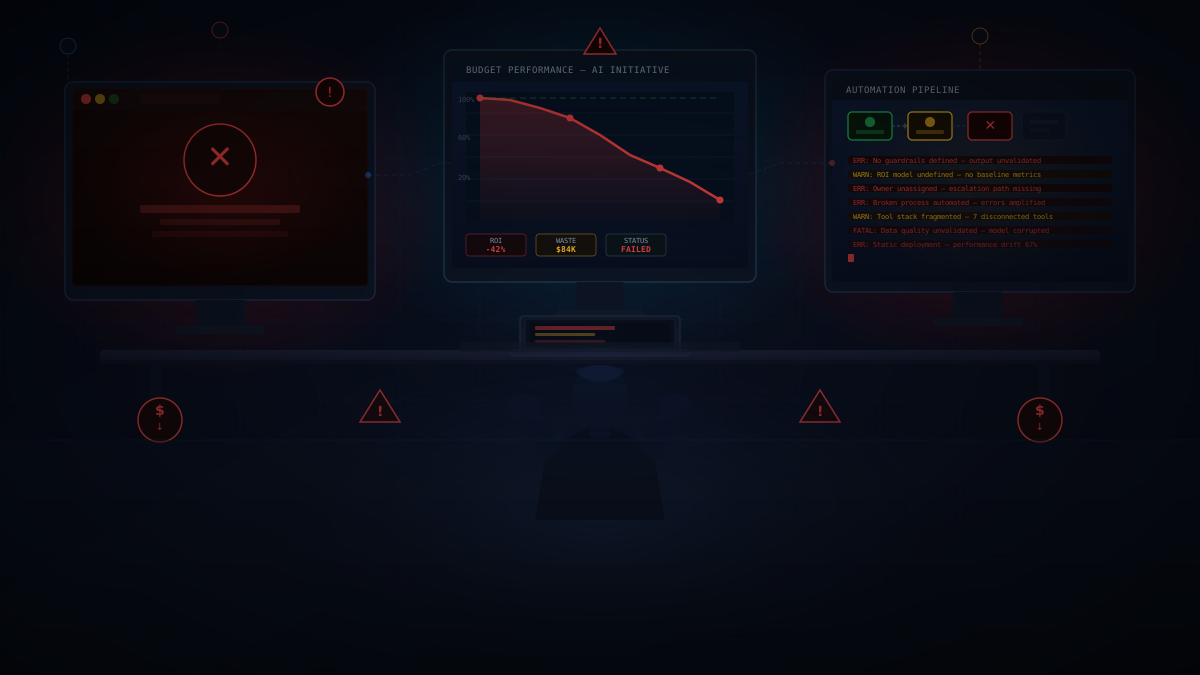
7 AI Infrastructure Mistakes That Burn Budget And How Mid-Market Organizations Avoid Them
AI is not failing. Execution is.
The Pattern Behind Failed AI Investments
Over the past eighteen months, mid-market organizations across B2B industries — from scaling operators to established enterprises moved aggressively to implement AI.
The results have been uneven.
- Disconnected tools that do not integrate with existing operations
- Automations that work in demo conditions and fail under real load
- No measurable ROI to present at budget review
- Teams that abandon systems within ninety days
- Quiet budget bleed that erodes leadership confidence in AI as a strategic investment
The problem is not the models. The models are capable. The problem is architecture, ownership, and execution discipline and seven specific mistakes that appear consistently in failed implementations.
If you are a COO, CTO, or operations leader investing in AI infrastructure, these are the mistakes worth understanding before the next build begins.
The Pattern Behind Every Failed Implementation
Most organizations treat AI like a feature addition. The organizations that generate durable operational value from AI treat it like infrastructure.
Infrastructure is designed before it is built. It is monitored after it is deployed. It is owned by someone accountable. It is iterated on a schedule. It is documented so that the people operating it understand how it works.
Feature additions are deployed and forgotten. Infrastructure is managed.
What Successful AI Infrastructure Implementation Looks Like
The mid-market organizations generating measurable, compounding value from AI infrastructure share a consistent pattern:
Outcomes defined and measured before tools are selected
Workflow clarity established before automation is designed
System architecture designed before development begins
Guardrails embedded at every layer of the orchestration stack
ROI tracked against defined baselines from deployment day one
Iteration cycles built into the operational model from the start
Clear ownership assigned before handoff, not after failure
AI infrastructure is not a shortcut. It is disciplined systems design applied to operational workflows. Organizations that treat it as such build compounding advantage. Organizations that treat it as a feature launch burn budget and conclude that AI does not work.
The Questions Worth Asking Before Your Next AI Investment
Before committing budget to an AI infrastructure build, the answers to these questions should be clear:
- Which specific operational metric does this initiative improve and by how much?
- Is the workflow being automated documented and consistent enough for AI to execute reliably?
- Are architectural guardrails defined and who is responsible for maintaining them?
- Is there a measurable ROI model and a defined review cadence?
- Who owns the system after deployment by name, not by department?
If any of these answers are unclear, the initiative has structural exposure before it begins.
Frequently Asked Questions
We are an Indian mid-market company planning our first AI infrastructure build. Where do these mistakes typically appear first?
In our experience with Indian mid-market organizations, Mistakes 02 and 05 appear most frequently and earliest. Workflows that appear consistent often have undocumented exception handling that the AI cannot execute correctly. And data quality particularly in organizations that have grown quickly is rarely as clean as the implementation team assumes. Starting with a structured process audit and a data quality review before architecture design eliminates both risks before they become expensive.
Our operations span India and the EU. Does AI infrastructure compliance add significant complexity?
It adds complexity that is entirely manageable when addressed at the architecture stage and significant complexity when addressed at the deployment stage. GDPR for EU data subjects and India's DPDP Act 2023 for Indian personal data have overlapping requirements around consent, data residency, and audit trails. Systems designed with jurisdiction-specific controls from sprint one meet both frameworks without architectural compromise. Systems retrofitted for compliance after deployment routinely require significant rebuilds.
We have already made some of these mistakes. Is it worth rebuilding or should we extend what we have?
This depends on which mistakes were made and how deeply they are embedded in the current architecture. Mistakes 01, 04, and 07 missing guardrails, tool stacking without system design, and absent ownership are often addressable through structured remediation without a full rebuild. Mistakes 02 and 05 — broken process automation and poor data quality — typically require going back to the process audit and data layer before extending the system. An architecture review conducted before a rebuild decision is almost always worth the investment.
How do we establish ROI baselines if we have never run AI infrastructure before?
Start with the operational metric most directly affected by the workflow being automated response time, processing volume, error rate, or team hours consumed. Document the current baseline manually before implementation begins. Define what improvement looks like at thirty, sixty, and ninety days post-deployment. The specific numbers matter less than the discipline of measuring against a defined baseline from day one. Without a baseline, you cannot demonstrate improvement and you cannot defend the investment at the next budget review.
What does clear ownership look like in a lean mid-market team without dedicated AI staff?
Ownership does not require an AI specialist. It requires a designated person who understands the system well enough to recognize when it is performing correctly and when it is not. Every system we deliver includes operational documentation and monitoring access designed for the team that will actually run it — not for the engineers who built it. If your team can manage a modern SaaS platform, they have the capability to own what we build. We scope the handoff during discovery so the ownership model is clear before deployment.
Book Your Architecture Review
Before Your Next AI Infrastructure Decision
30 minutes. We will assess your current AI infrastructure position and identify your highest-risk exposure points before your next investment decision.
Book Your Architecture Review →